

Micro-Learning Sessions
Micro-Learning Sessions
Sessions usually include:
- Practical strategies to support culturally inclusive care
- Case examples informed by real-world service delivery
- Reflections on applying standards and the Diversity Framework in different care contexts
Target Audience:
- Aged Care Staff and Volunteers
- Managers and Team Leaders
- Providers seeking flexible workforce learning options
2025
This webinar series explores the practical application of the Diversity Framework, providing actionable insights and real-world strategies to support inclusive and equitable practice across a range of settings. Each session is designed to translate principles into meaningful action, supporting professionals at all stages of their diversity and inclusion journey.
Cultural Celebration in Person-Centred Care - A Holistic Approach to Inclusive Aged Care
Effective Communication with CALD Older: People Key points
Communications and Interactions with Diverse Older Clients
Storytelling and Reminiscence in Aged Care
Managing Unconscious Bias in Aged Care Using EQ and CQ
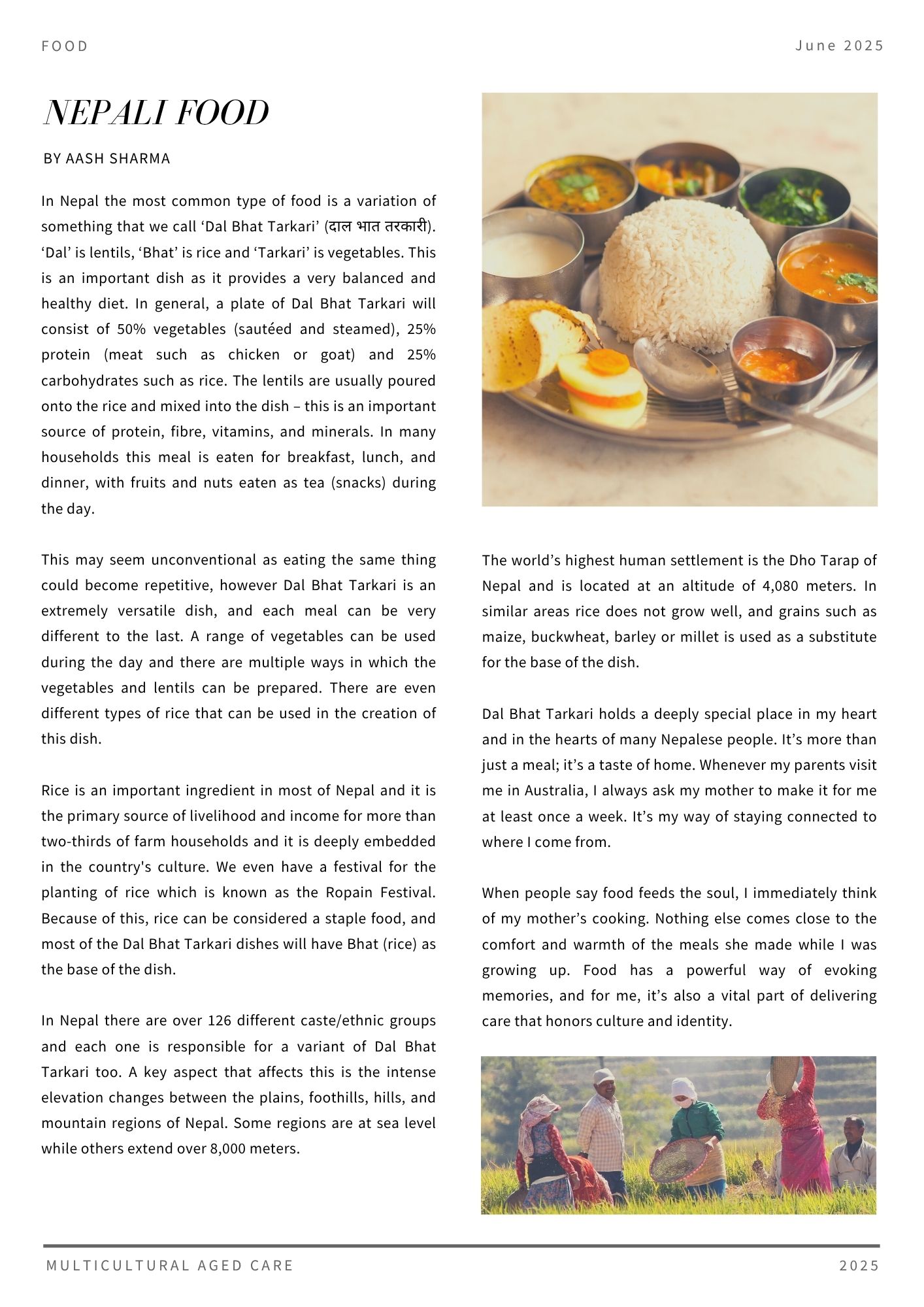
Food Feeds the Soul
Diversity in Palliative Care
Digital and Physical Resources
Further Resources
MAC National Symposium – 19/06/2025
The Untold Stories; conversations that must be had
Theme: Palliative Care and End of Life
The context will address unpacking:
- Advanced Care Planning and Directives
- Religion/Spirituality
- Cultural Intelligence
- Emotional Intelligence
- Anxiety
- Impacts of Crisis
- Unconscious biases (especially workforce)
Let’s talk about insights/examples about the various approaches/beliefs from different CALD groups regarding all of the above. Let’s take this opportunity to share personal reflections, professional experience, tools, strategies, resources.
How do we prompt discussions and provide strategies regarding quality of life?
- What does that look like?
- How do we work towards achieving this for each person?
- How do we work with both, a diverse workforce and individuals (and families)?
- What are some case scenarios?
Our exciting line up of speakers includes:
- Jennifer Tieman, Matthew Flinders Professor, College of Nursing and Health Sciences, RePaDD
- Catherine Ooi, The University of Adelaide
- Caroline Ford, Program Manager – Palliative Care, Southern Cross Care (SA, NT & Vic)
- Milja Lanzoni, Care & Quality Advocate, St Basil’s Homes (SA) Corporate Services
- Jeannette Stott, Manager of Psychological Services, Relationships Australia
- Jingqian Nong, Senior Practitioner, Supporting Emotional Wellness in Aged Care program, Relationships Australia
Watch here: https://mac.org.au/training-education-information/mac-symposium-series/mac-national-symposium-june-july-2025/
Food Feeds the Soul: Nepali Food
2026
Working with Families and Carers from CALD Backgrounds
Recognising and Responding to Elder Abuse in CALD Contexts
Supporting People Living with Dementia from CALD Backgrounds: Practical Approaches in Everyday Care
Grief and Bereavement Across Cultures - Supporting Older People and Families from CALD Backgrounds
Mental Wellbeing in CALD Ageing - Recognising and Responding in Everyday Care
Advanced Care Planning in CALD Contexts - Supporting Conversations in Care
Factsheets
Recognising and responding to the elder abuse in CALD Context
Recognising and reducing unconscious bias in everyday care
Supporting storytelling and reminiscence in culturally responsive aged care
Supporting grief loneliness and emotional wellbeing in CALD Ageing

