

Easter at Amber Aged Care
By Margota Pukitis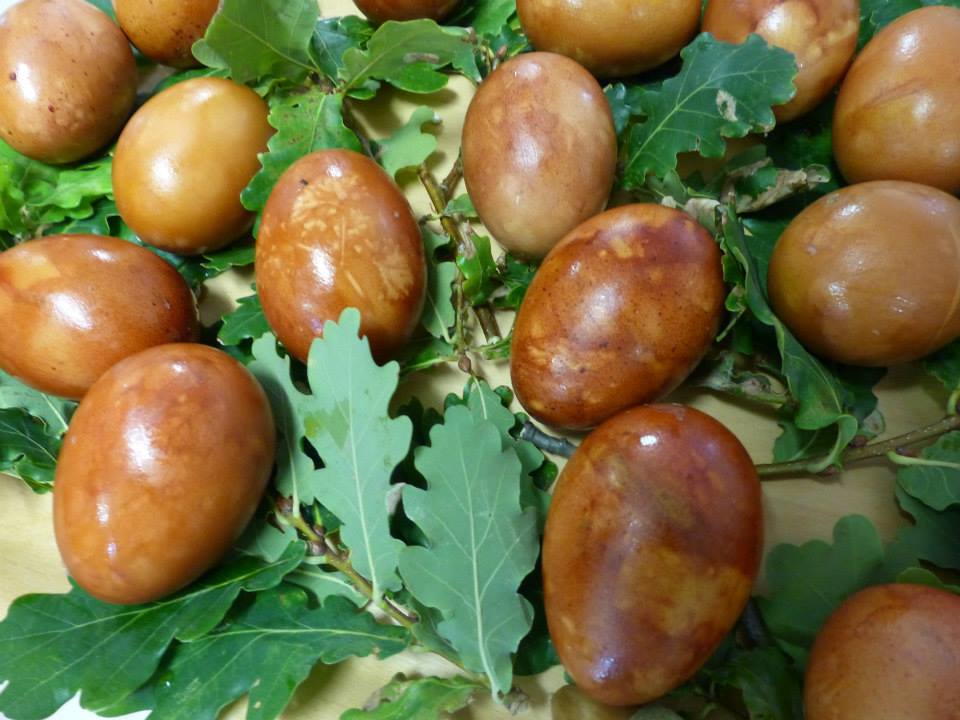
Amber Aged Care formerly Baltic Communities Home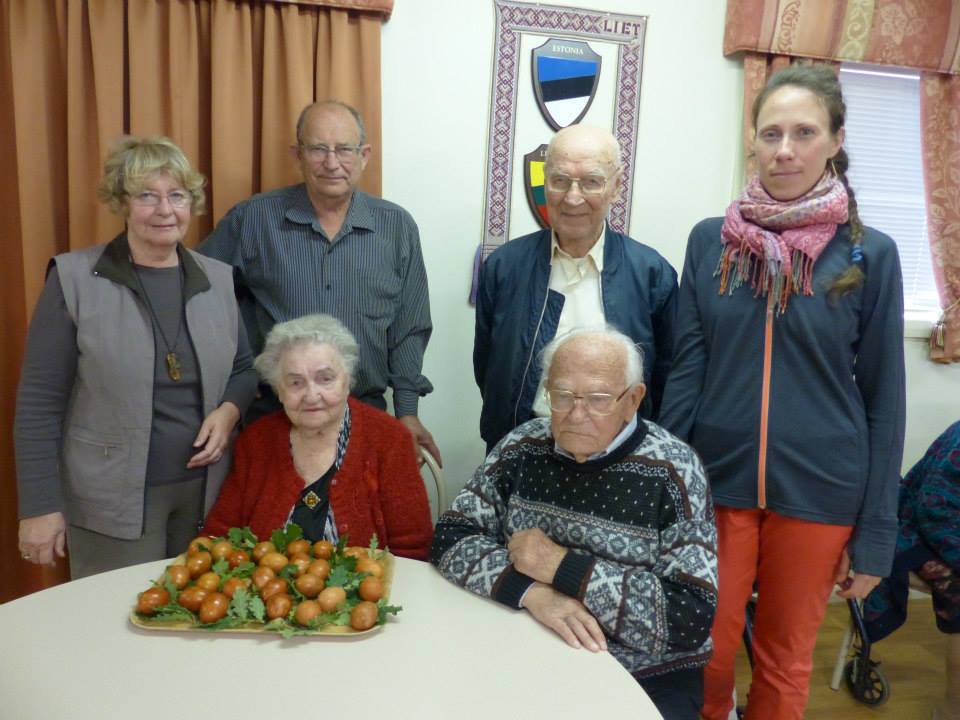
 ensures that culturally appropriate activities are
  very important and vital for the Baltic people who live there. Easter is very important for these people from a cultural as well as religious perspective.
The lifestyle co-ordinator with the help of volunteers ensure that occasions like Easter, are celebrated in a culturally accepted manner. Easter is associated with spring in the Baltic countries and the egg , a symbol of new life, plays an important part in the celebrations of this festival.
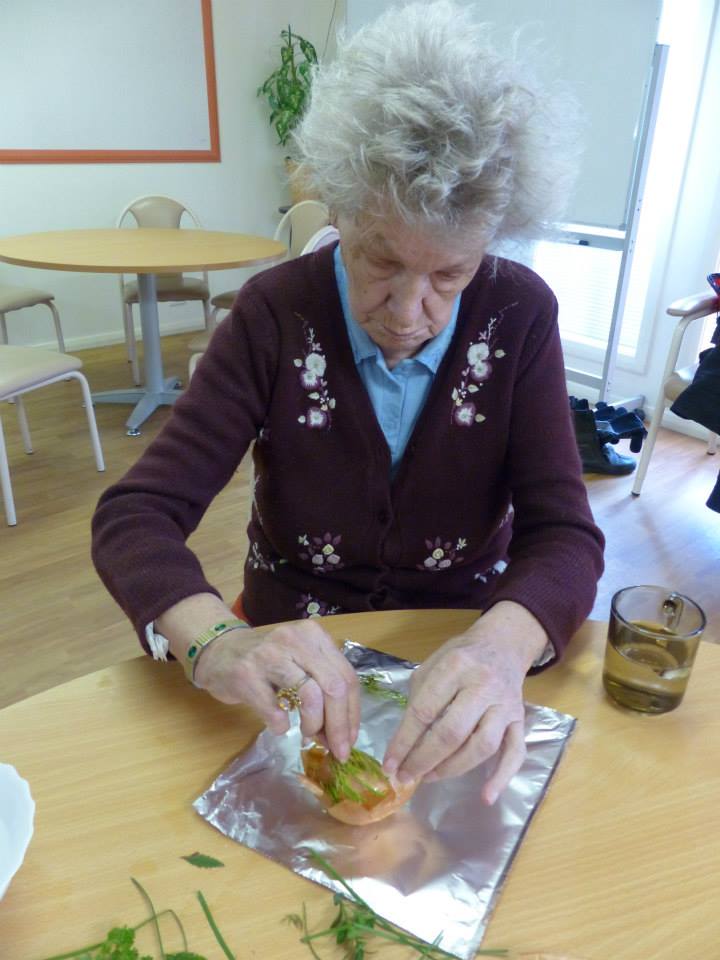
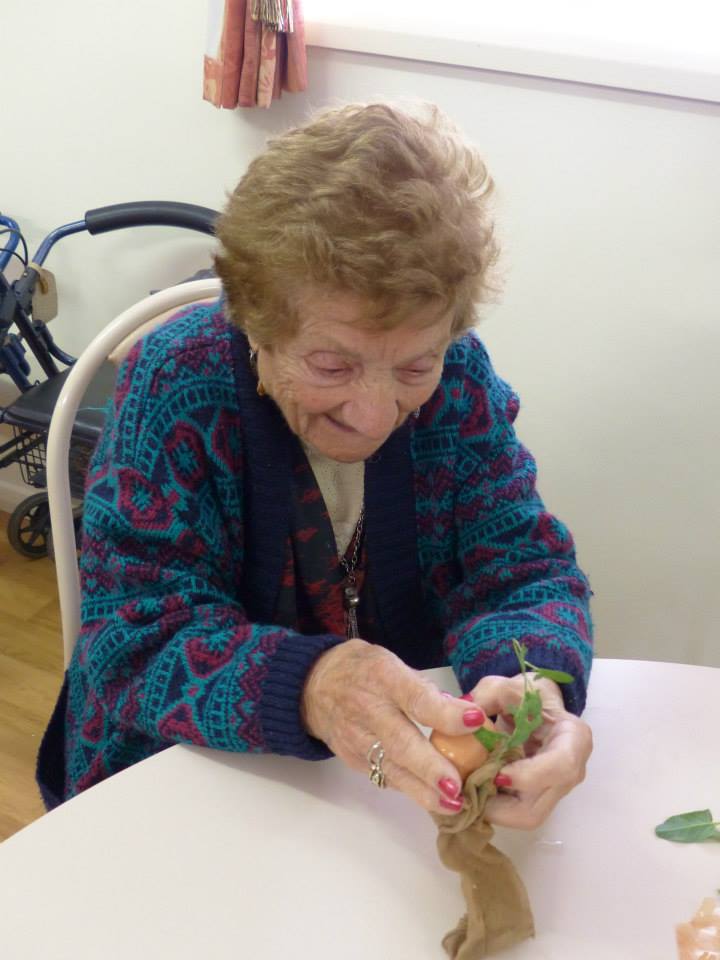
A few weeks before Easter people begin collecting brown onion skins to be used for colouring the eggs. This method of colouring eggs has been passed down from many generations and continues to be an important ritual and unique activity that is done only at Easter. The unboiled egg is gently handled, some small leaves, grass, flower petals, grains of rice stuck to the egg shell with water and covered with several layers of onion skins. This covered egg is then gently wrapped in a small cloth, or put in a discarded panty hose and immersed in a saucepan of water. Bring the water to boil, simmer for about 10 minutes. Gently take the boiled eggs from the saucepan and allow to cool before taking the egg from the cloth or panty hose. Then slowly remove the onion skins and when dry rub a bit of fat from bacon to give the egg a sheen.
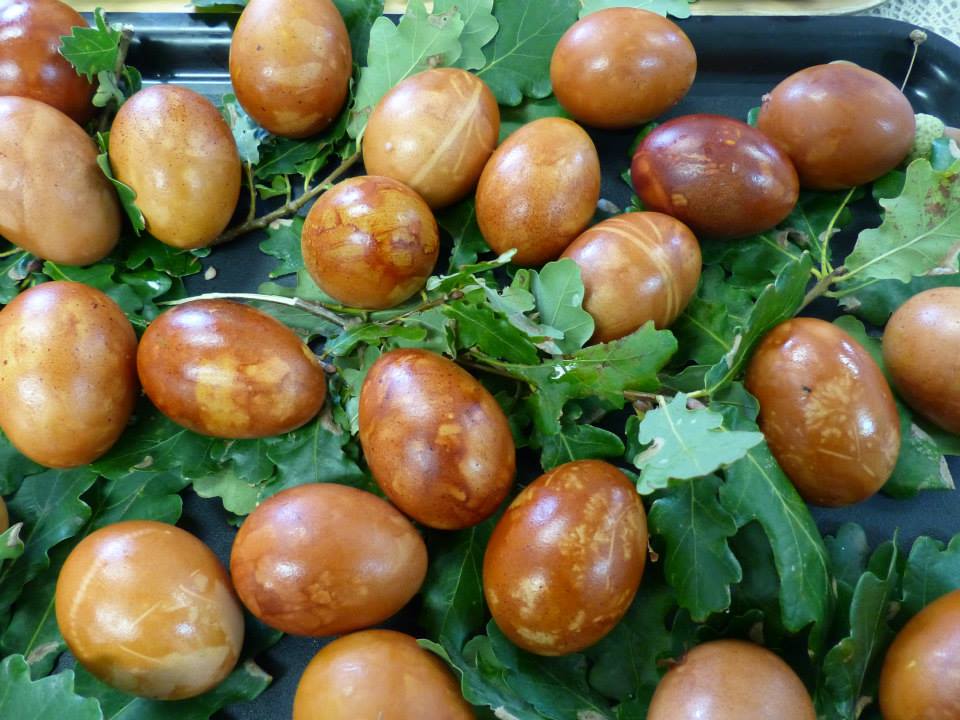
The coloured eggs are used as gifts for friends and neighbours and there are numerous games played involving eggs. The coloured eggs are displayed as a centrepiece on the table to be admired by anyone who is visiting or passing by. Comments are made about the patterns seen on the shell, the intensity of colour and compliments are always graciously accepted.
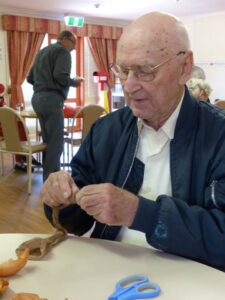
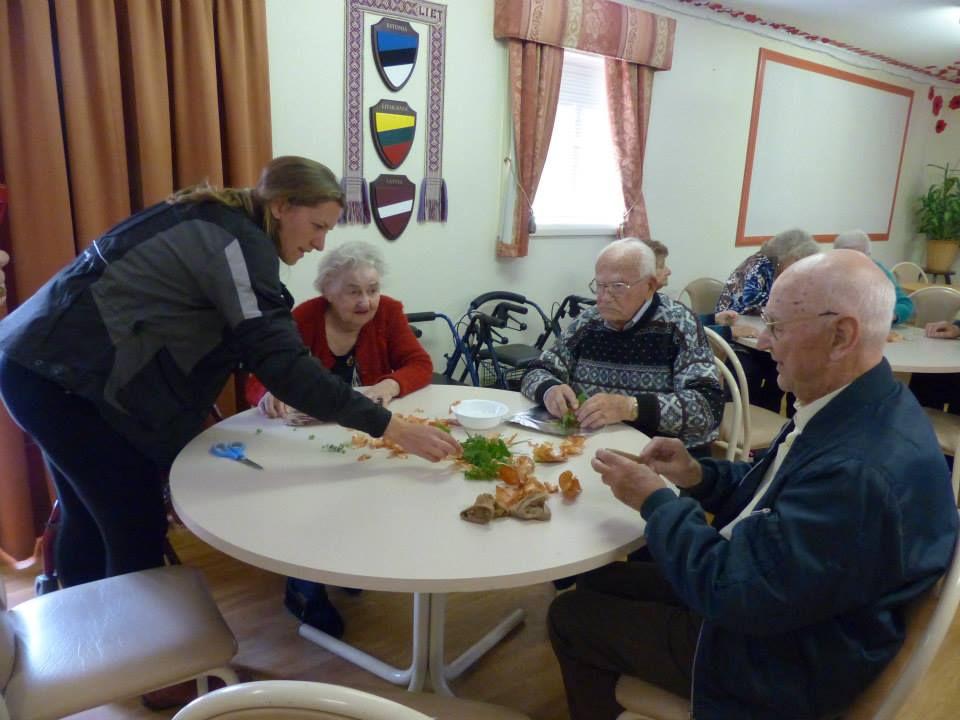
Thursday 26th. March in the afternoon the residents who wanted to take part in this activity assembled in the activity room . As they were covering the egg with onion skins they talked among themselves how they used to do it in their homeland as children. Today there is a challenge as most of the eggs are brown and the brown onion skins colour the eggshell a darker brown and it is difficult to get the lighter yellow colour that is most attractive if the eggshells are white. In our Latvian community there is an intensive search for white eggs, once the information is available, the race is on, who can get most of these eggs so that they can distribute them among the community. Other European communities are also very 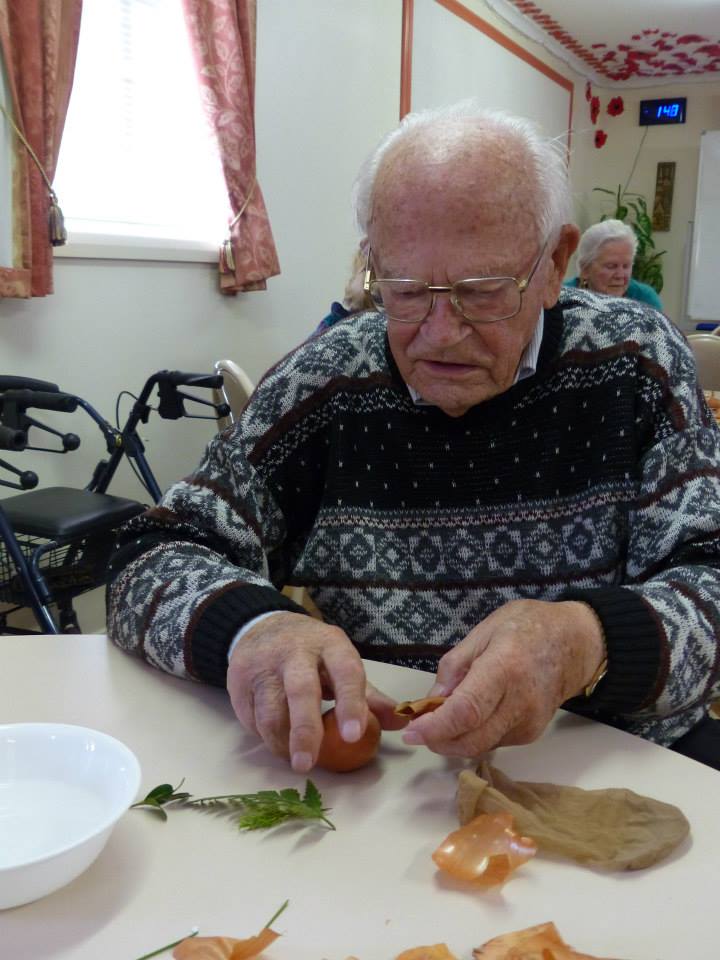 keen on white eggs, as they also have a culture of painting eggs, but not limited to our method of using brown onion skins. Despite the lack of white eggs the people at Amber Aged Care were absolutely thrilled to see the transformation of the pure brown egg to a multi coloured brown patterned egg once the onion skins were removed. It was as if a magician had waved a magic wand over the boiling pot. The look on their faces when they saw the many patterned shades of brown shining eggs displayed on the tray is a testimony of the joy and satisfaction of a well done job. Their faces lit up and a smile appeared as they took a deeper breath as they enjoyed the beauty they had created in front of them.